
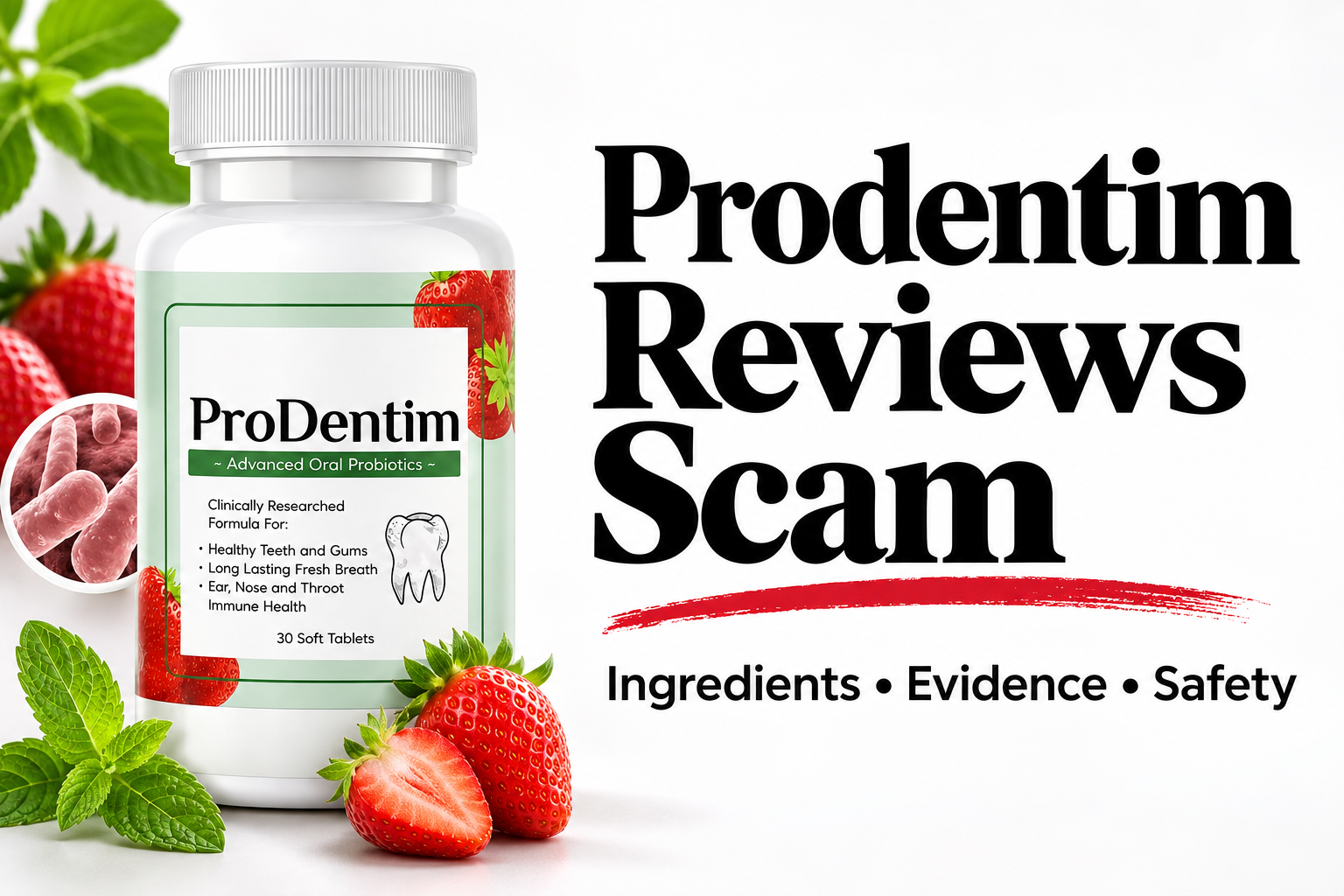
FTC Disclosure: This page contains affiliate links. If you buy through links to the official Prodentim site, we may receive a commission—at no extra cost to you. When looking up Prodentim Reviews Scam, confirm the latest package pricing, bottle label, and written refund terms directly on the checkout page.
- Pros:
- Transparent main probiotic strains on the label
- Moderate-dose inulin (prebiotic) included
- Simple chewable format, easy to use
- 60-day money-back guarantee advertised
- No artificial colors or stimulants
- Cons:
- Mismatch between sales claims and real label
- Evidence is limited for most strains/use
- Refund complaints reported
- Not FDA approved; benefits not guaranteed
- Label is vague on strain dosages, only blend total
Table of Contents
Prodentim Reviews Scam: Prodentim Ingredient List: What the Label Shows
If you’re searching for clear info because of all the “prodentim reviews scam” chatter, you’re not alone. Here’s what’s actually in Prodentim according to the real supplement label—as documented by the NIH and the official site:
- Proprietary Probiotic Blend (3.5 billion CFU per serving; labeled as 20 mg):
- Lactobacillus paracasei
- Lactobacillus reuteri
- Bifidobacterium lactis BL-04
- Inulin (100 mg)
- Streptococcus salivarius (20 mg)
- Other ingredients: tricalcium phosphate, peppermint leaf, flavorings (strawberry, peppermint), agave, stearic acid, mannitol, magnesium stearate, silicon dioxide, sucralose, microcrystalline cellulose.
Notably, the label does not list ‘malic acid’ as a main ingredient, despite some sales language suggesting so. Also, sweeteners (agave, sucralose, mannitol) and flavorings are included, even if they’re not front and center on the marketing pages. Anyone searching for Prodentim Reviews Scam should compare the current seller details and return instructions before placing an order.
Prodentim Label vs. Website Claims: Where Do They Mismatch?
- ‘Malic acid’ is not on the label, despite marketing claims.
- Sales pages often talk about ‘5 main ingredients’; the real label lists more when you count the blend and additives.
- ‘3.5 billion CFU’ refers to probiotics at the time of manufacture, not guaranteed at expiry.
- Some sites omit Streptococcus salivarius, which is on the latest label.
Prodentim Reviews Scam: Probiotic Strains & Their Purported Benefits
Now for the science. These are the main probiotic strains inside Prodentim and what research (so far) does—and doesn’t—show for oral health.
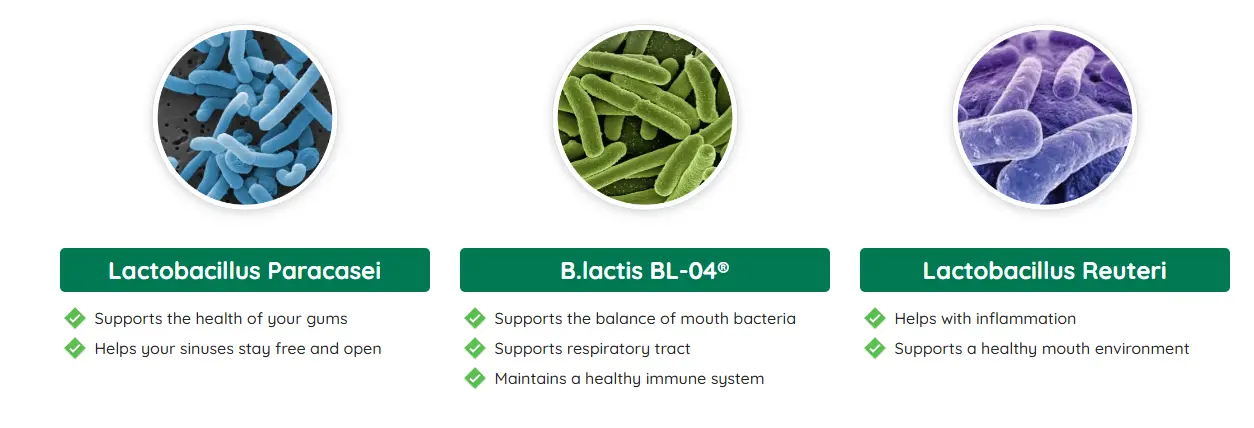
- Lactobacillus paracasei:
Some studies (mainly in children) suggest certain strains could help reduce cavity-causing bacteria. Evidence for routine adult use, gum health, or breath is limited, and mainly from small, short trials. Not all L. paracasei strains are equal—formulation matters. - Lactobacillus reuteri:
Occasional research on specific strains (like DSM 17938, not specified in Prodentim) for reducing gum inflammation and support for periodontitis. Effects are small; benefit may not generalize to this supplement. - Bifidobacterium lactis BL-04:
Typically studied for gut support, not oral health. Limited to no strong evidence for gum or tooth support. - Streptococcus salivarius:
Some clinically tested strains (like K12, M18) have shown small benefits for bad breath and possible reduction of strep bacteria in the mouth—not confirmed for whitening, gum health, or all-around dental improvement. Prodentim does not specify if these are the K12/M18 strains.
What’s missing? Large, independent, long-term clinical trials on these ingredients together, via this exact chewable formula, do not exist as of this writing.
For a deep-dive on real user experiences, see prodentim reviews and complaints (independent site not tied to official sales).
Other Ingredients & Additives (What They Do)
In every Prodentim tablet, you’ll also find several “other ingredients”—standard for chewable probiotics but still worth noting, especially for allergy or sensitivity:
- Inulin (100 mg): A common plant-based prebiotic fiber. Used as food for the probiotics; some oral health products include it for that reason. Scientific research mainly links inulin to digestive—rather than oral—benefits like promoting “good” gut bacteria and supporting regularity (NIH, HelloPharmacist, DSLD database).
- Tricalcium phosphate: Provides calcium (small amount); also acts as a tablet stabilizer.
- Sugar alcohols & sweeteners (mannitol, agave, sucralose): Added for taste. Mannitol is sometimes associated with digestive upset in large amounts.
- Flavorings (peppermint leaf, strawberry flavor): Natural and artificial; for taste and palatability.
- Stearic acid, magnesium stearate, silicon dioxide, microcrystalline cellulose: Non-active ‘flow’ and binding agents. Common in chewable and tablet supplements, not shown to harm in typical doses.
Ingredient Claims vs. Actual Label: Mismatches
Here’s a side-by-side so you can see what’s hyped in the marketing vs. what’s on the product itself.

| Claimed Ingredient (on Sales Site) | On Actual Label? | Details |
|---|---|---|
| Lactobacillus paracasei | ✔️ Yes | Exact strain not specified; part of blend at 3.5B CFU. |
| Lactobacillus reuteri | ✔️ Yes | Exact strain not specified; part of blend. |
| Bifidobacterium lactis (BL-04) | ✔️ Yes | Labeled as BL-04; dose not broken out. |
| Streptococcus salivarius | ✔️ Yes | 20 mg on label; strain unspecified. |
| Inulin | ✔️ Yes | 100 mg per label. |
| Peppermint, agave, strawberry (for flavor) | ✔️ Yes | In “other ingredients” but not promoted up front. |
| Malic acid | ❌ No | Not on label; sometimes mentioned in marketing. |
As you can see, some heavily advertised ingredients (like malic acid) are missing from the actual supplement facts. Extra flavor and sweetener ingredients may matter if you have allergies or want to avoid artificial sweeteners.
Confused by competing sites? Check the prodentim official website for their current label graphics, then review independent warnings at prodentim scam complaints.
What Science Says About These Ingredients
Here’s what real, published research—and pharmacist analyses—say about each major ingredient. Most oral-health claims for “chewable probiotic ingredients” are hedged or only slightly supported:
- Probiotic strains: There are small studies suggesting L. paracasei and L. reuteri may modestly support gum health or help crowd out “bad” bacteria in the mouth. But results tend to be temporary, and strain-specific (one strain may work, another may not). No direct evidence for cavity prevention or tooth whitening.
- BL-04 Bifidobacterium lactis: Used more in gut health products. Little research for oral benefits.
- Streptococcus salivarius: Some evidence (especially K12, M18 strains) for supporting fresher breath and possibly oral microbial balance. The label does not specify K12/M18.
- Inulin: Commonly used as a prebiotic for gut health—not unique for oral health. Not shown to directly impact teeth or gums in studies.
- Other Ingredients: These act as carriers, sweeteners, and tableting agents—neutral or only relevant for flavor/stability; not claimed to affect teeth or gum health themselves.
At this time, NO ingredient in Prodentim has strong independent evidence that it dramatically improves oral health, whitens teeth, or replaces brushing/flossing. Positive effects in scientific trials, when seen, are often small and limited to specific populations or strains.
For a closer look at international options, check prodentim uk; for big-box retails, see prodentim walmart.
Possible Side Effects and Interactions
- Generally mild if healthy: Most people tolerate low-dose probiotics and inulin well. Some may experience mild digestive issues (gas, bloating, especially with inulin or mannitol), or a mild change in breath taste.
- Serious reactions rare: But anyone with a suppressed immune system, serious allergies (especially to dairy or strawberry/pollen), or on immunosuppressive therapy should check with a healthcare provider before starting any probiotic.
- Drug interactions: No major interactions established at these doses, but if you’re taking immunosuppressants, cancer therapies, or have a central line, always consult your doctor first (HelloPharmacist, NIH base).
- Artificial sweeteners: A few people may react to sucralose or mannitol; effects are rarely severe but can include digestive discomfort.
Refund Policy and Scam Warnings
- The official site (here) advertises a 60-day money-back guarantee.
- Trustpilot and Reddit users have reported refund difficulties and slow customer service. Make sure you keep proof of purchase, order through the real site, and act fast if requesting a refund.
- There are many copycat sites claiming to be official—buy direct only if you choose to try it. Read the prodentim scam complaints for details.
Prodentim Ingredient FAQs
- What are the key ingredients in Prodentim?
- According to the label: a proprietary blend of three probiotics (Lactobacillus paracasei, L. reuteri, B. lactis BL-04), Streptococcus salivarius, inulin, and common chewable tablet additives for flavor and texture.
- Does the Prodentim label match the marketing claims?
- No, not entirely. Some claimed ingredients (malic acid, for example) don’t appear on the label, and actual quantities of each strain are not specified beyond the blend total. Sweeteners and flavors are present but not heavily marketed. This mismatch is a reason for some of the ‘prodentim reviews scam’ accusations out there.
- Are all ingredients backed by research?
- Not for oral health. Small studies support some strain-specific benefits for gum health or breath, but evidence is limited. No ingredient is proven to whiten teeth or replace routine dental hygiene. Inulin is well-studied for digestive support, not oral.
- What are the possible side effects?
- Mostly mild for healthy adults: gas, mild bloating or taste changes. Rare allergic reactions can occur (for those allergic to listed components). Immunocompromised people or the severely ill should consult their provider before use.
- Are the probiotic strains unique for oral health?
- Lactobacillus paracasei and Streptococcus salivarius are among strains sometimes studied for oral health, but results are modest and strain-specific. Prodentim’s exact strains aren’t fully detailed. BL-04 is mainly a gut health strain in other products.
- Is there anything missing from the official site’s list?
- Yes—the site often doesn’t mention that malic acid is absent, or highlight the sweeteners/flavorings. Dosage details for each probiotic, and data on effectiveness for teeth and gums, are not provided.
Medical Disclaimer: This article is for informational purposes only. It does not provide medical advice. No supplement, including Prodentim, is a substitute for regular dental care, professional advice, or prescribed treatment. If you have health concerns, discuss with your dentist or primary care provider.
5 thoughts on “Prodentim Reviews Scam: Prodentim Ingredients: What’s Really Inside? Label Breakdown”